A company built by adapting
The ELECTRIC story begins in 1990, in a period when the Romanian economy was being transformed from the ground up. At the start, we did not make packaging. We became a packaging manufacturer because, every time the market changed, the company knew how to adapt and take the next step.
Often that step came from the customers themselves. They asked us for the next component of the pack, and we invested in order to make it. The stopper led to the cap, the cap to the bottle, the bottle to the mould, the mould to building our own workshop, and film — used at first as shrink film — was the department that opened the way to an entirely new category of products.
There was no single spectacular leap, but thousands of steps taken one after another, over more than three decades.
Today ELECTRIC operates three factories in Focșani and integrates, within the same company, the entire route of a pack: from idea, design and mould through to series production, packing and the pallet delivered to the customer by our own fleet.
Timeline: 1990 → 2026
- 1990
The beginning. Plastic housings for electrical switchgear
ELECTRIC starts out as a small production unit for electrical switchgear, equipped with Japanese machines on which plastic housings were made for thermostats, relays and other electrical components.
That was our first contact with plastics processing. At the time we had no way of knowing that this technology would define the decades of company history to come. - 1991
The first reconversion. From electrical switchgear to wine closures
Romania's opening to Western products made electrical switchgear production increasingly hard to sustain. We did, however, have the machines, the experience and the know-how for processing plastics.
The answer was right next door. Vrancea is one of Romania's most important wine regions, and the wine industry had a constant need for packaging and closure solutions.
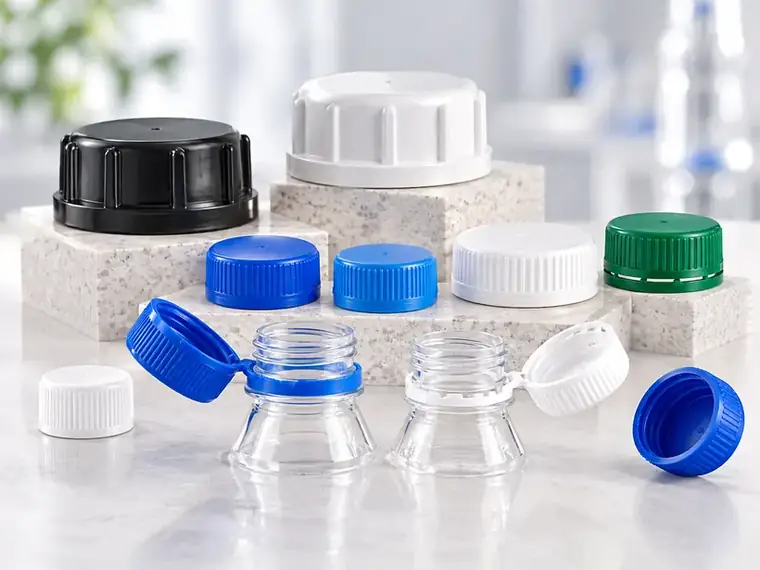
We started with winged stoppers, then came hood caps, various closure systems and finally screw caps.
That is when the mechanism that would accompany our whole history took shape: the customer asked for the next piece of the pack, and we learned to make it. - 1996
From cap to bottle. The first extrusion-blow line
Once we started making closure systems, the customers' question came naturally: “But can't you make the bottle too?”
In 1996 we commission our first technology for producing polyethylene bottles by extrusion blow moulding.
From that moment we were no longer making just a component of the pack. We were starting to make the pack itself.
As the machine park grew, another essential need appeared: maintenance. That is how our own machine shop began to develop, initially for servicing and repairing production equipment. - 2003
Entering the PET era
PET was becoming ever more present in packaging: light, clear, strong and able to open new design possibilities.
In 2003 we buy our first semi-automatic PET blow moulding machine. Compared with today's plant its capacity was small, but technologically the moment was a huge step for the company.
One machine was followed by another. New volumes, new shapes, new necks, new preforms and, inevitably, new moulds appeared.
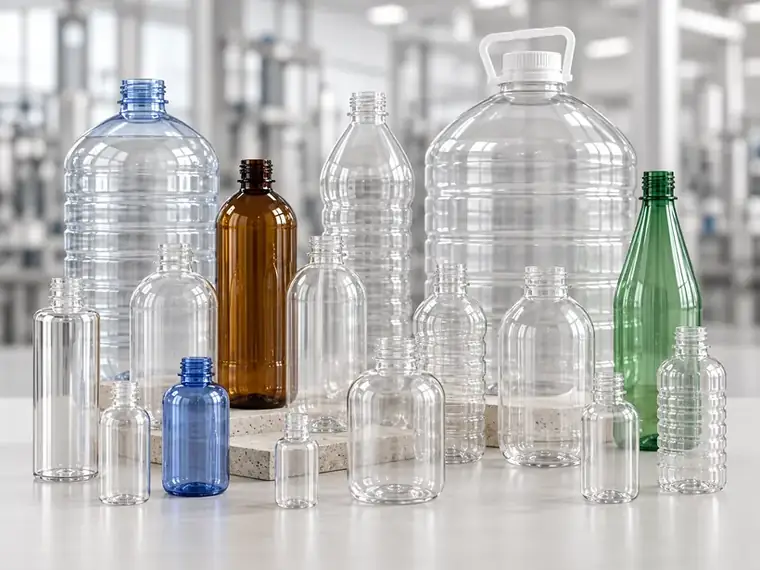
From that first PET machine installed in 2003 we have reached, in 2026, a capacity of over 28.2 million PET containers a month. - 2007
Flexible packaging. One film opens a whole category
We could already deliver PET bottles, polyethylene containers and various closure systems. But packing a product often required one more essential element: film.
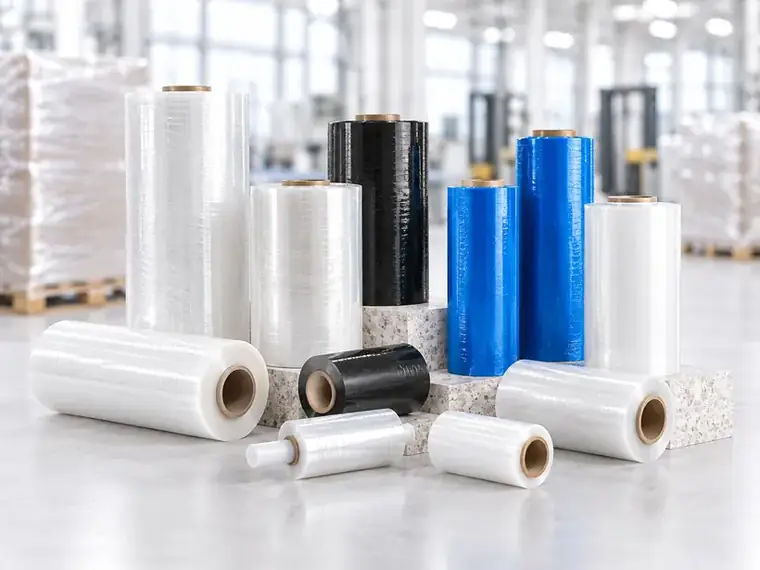
In 2007 we invest in shrink film production.
As at every previous stage, a single product would open the way to an entire category. If we could extrude film, we could make other kinds of flexible packaging too.
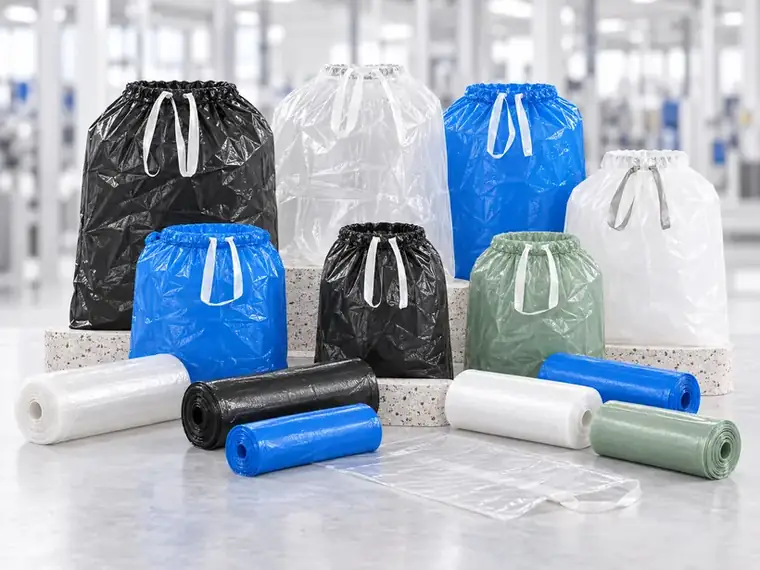
Sacks, pouches, carrier bags and films for various applications followed, and with them came new extruders, sealing and converting machines, and printing equipment. - 2012
From machine shop to tool room
As the number of machines and products grew, it became ever clearer that the real advantage was not only being able to produce, but being able to modify, repair and develop ourselves what we produced.
In 2012 the workshop is re-equipped through investment in CNC machining centres and precision machining equipment.
From that moment the road to a new pack becomes much shorter:
idea → design → prototype → mould → testing → series production.
All of it inside the same company. - 2019
Circular Plastics Alliance. Circularity becomes a strategic direction
In 2019 ELECTRIC becomes a signatory of the Circular Plastics Alliance (CPA), the company being represented at the signing of the declaration by Cosmin Buzaianu, Managing Director.
The Circular Plastics Alliance is a European initiative bringing together producers, converters, recyclers, brands, organisations and authorities, with the aim of increasing the use of recycled plastic in new products across Europe.
For us, joining this initiative confirmed a direction we consider essential: the recyclability of a pack begins the moment it is designed, not when it becomes waste. - 2026
Three factories. The 37th year of the ELECTRIC story
In 2026 we are in the 37th year of the story that began in 1990.
ELECTRIC today operates three factories and integrates technologies for rigid packaging, flexible packaging, injection moulding, extrusion blow moulding, PET blow moulding, tooling, design and prototyping.
Behind today's figures there is not one spectacular investment, but over three decades of successive ones.
A machine bought because a customer needed a new product. A workshop developed because we had to be able to repair our own equipment. A CNC centre acquired because we needed to modify a mould faster. A new technology introduced because the market was changing again.
That is how ELECTRIC was built: by adapting, step by step, from a small production unit to an integrated packaging manufacturer.
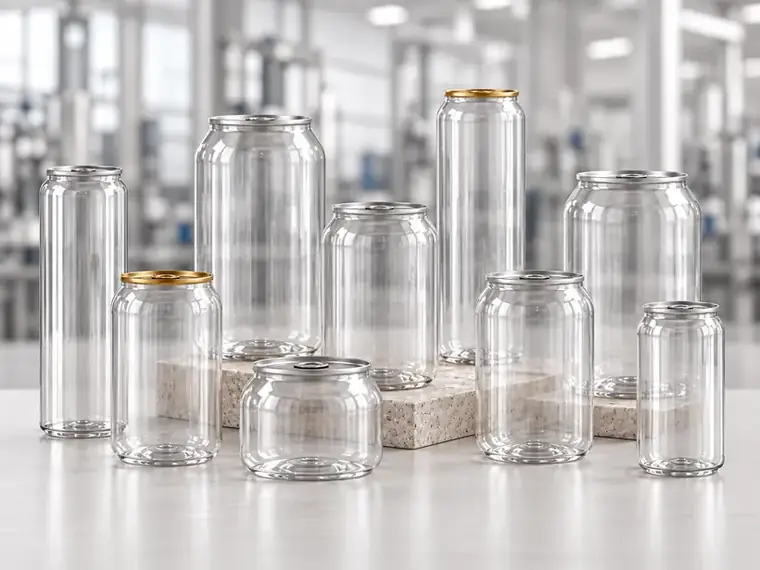
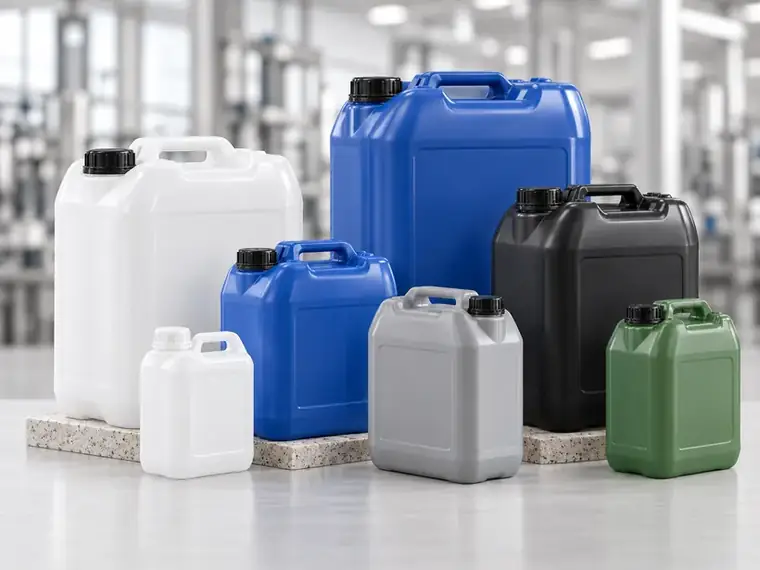
What our factories can produce in a single month
The scale we have reached is expressed most simply through monthly production capacity, by category.
Next chapter: energy, automation and independence
Today our investment is no longer only production capacity. It is also the energy needed to sustain the industry of the future. Our sites currently have almost 1.4 MW of photovoltaic capacity installed, alongside roughly 460 kW of storage, and the investment programme in energy generation and storage continues.
- Lower specific consumption. kWh per kilo of processed material, tracked per machine and per shift.
- More efficient machines. Servo-hydraulics and all-electric drives when older machines are replaced.
- Automation. Handling, palletising and transfer between operations, with fewer manual touches.
- Digitalisation. Tracking every order, every machine, every kilo of raw material and every product that leaves the plant.
The factory we are building for the years ahead does not only have to be bigger. It has to be smarter, more efficient and more circular.
Where we started. Where we are.
| Year | The step |
|---|---|
| 1990 | We made plastic housings for electrical switchgear. |
| 1991 | We started making closures for wine bottles. |
| 1996 | We produced our first polyethylene bottles. |
| 2003 | We entered the world of PET. |
| 2007 | We started film and flexible packaging production. |
| 2012 | The machine shop became a tool room. |
| 2019 | We signed the Circular Plastics Alliance Declaration. |
| 2026 | Three factories, tens of millions of containers and hundreds of tonnes of flexible packaging a month. |
But probably the most important thing has not changed. Every time the market put a change in front of us, we chose to learn, to invest and to keep producing. That is how we got here. And that is how we mean to continue.
ELECTRIC SRL · Made in Romania since 1990. 36 years of experience. The 37th year of building further.